Why this matters
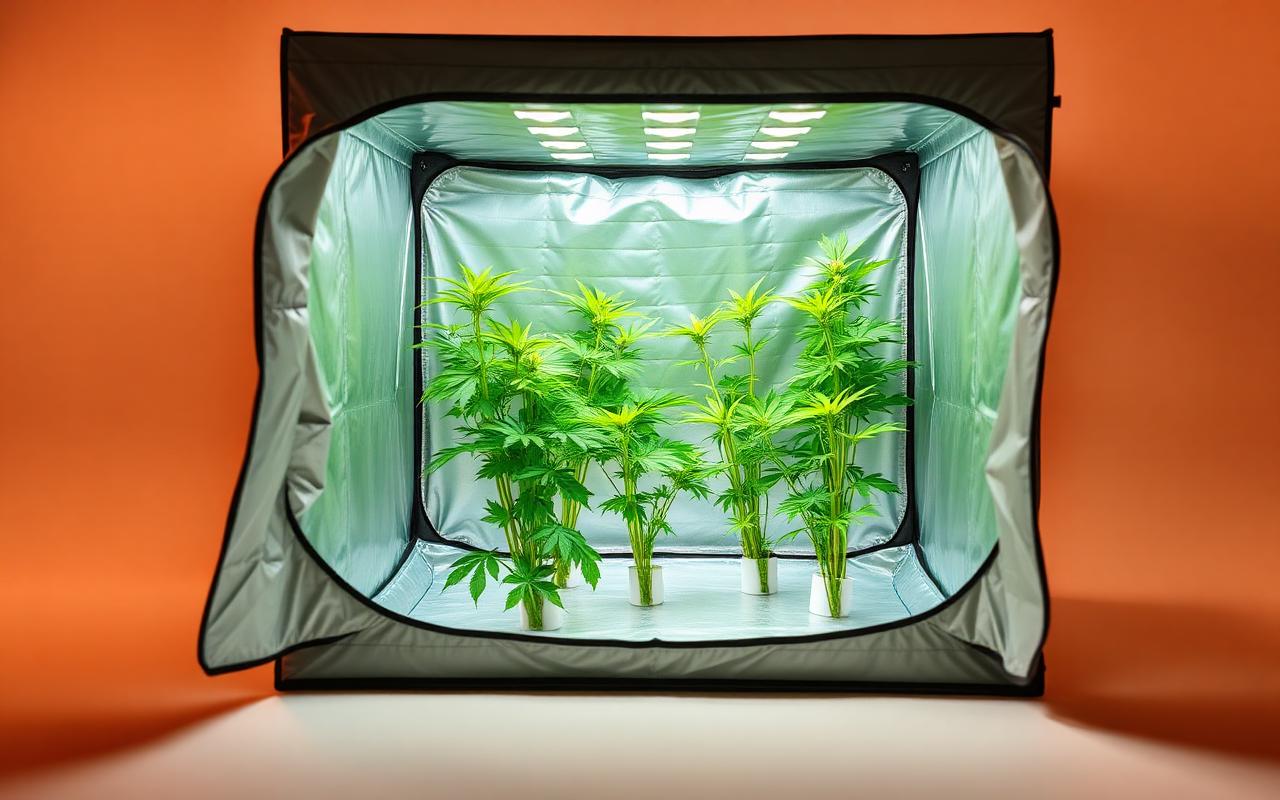
A grow tent is the controlled environment everything else plugs into. The right tent reflects light efficiently, blocks light leaks, supports your gear and lasts through dozens of cycles.
Cheap tents fail at the seams, leak light during dark periods and fall apart after a year. Spending a little more up front saves money and headaches.
Disclosure: Some links on this page are affiliate links. If you make a purchase through these links, Chill420 may earn a commission at no additional cost to you. This helps support our content and product reviews.
What to look for
Reflective interior
600D or higher diamond Mylar walls bounce light back to the canopy and dramatically improve yield per watt.
Lightproof zippers
Double-stitched zippers with light traps prevent leaks during the dark period — critical for flowering.
Frame strength
Heavy 16-19mm steel poles support lights and fans. Plastic connectors and thin poles bend under filter weight.
Ventilation ports
Multiple ducting ports, passive intake vents and cord pass-throughs make setup vastly easier.
Observation window
A mesh window lets you check plants without opening the door and disturbing the environment.
Spill tray
A removable waterproof floor tray contains overflow from watering accidents.
Budget, mid range or premium?
Here is what each level actually buys you.
Budget tent
$70 – $120
Basic 2'x2' or 2'x4' tent with 600D fabric.
Best for
First-time growers testing the hobby.
Mid-range tent
$150 – $300
1680D or 2000D fabric, reinforced corners, multiple ventilation ports.
Best for
Most home growers — long-lasting and reliable.
Premium grow tent
$350 – $700
Commercial-grade construction, thick steel frame, optional observation glass, easy-access designs.
Best for
Multi-plant or perpetual harvest growers.
Watch out for
Diminishing returns for a single hobby grower.
Common mistakes
MistakeBuying a tent that's too small for the plant count you actually want.
FixPlan for 4 sq ft per mature plant. A 2x4 fits two healthy plants — not the four the marketing suggests.
MistakeIgnoring height — short tents force light too close to the canopy.
FixMinimum 6 feet of usable height for indoor grows. 7 feet is more comfortable for taller strains.
MistakeSkipping the spill tray.
FixOne forgotten valve costs you a floor. Always use the included tray or a separate plant saucer.
MistakeUsing passive intake with strong exhaust on a tight tent.
FixNegative pressure crushes cheap tent poles. Match exhaust CFM to tent volume and add active intake if the tent flexes inward.
MistakeGoing huge on the first grow.
FixA 2x4 tent teaches you everything a 4x8 will, with less risk, lower bills and faster recovery from mistakes.
The full guide
Picking the right size. A 2x2 holds one plant comfortably. A 2x4 holds two. A 4x4 holds four. A 4x8 fits a small commercial setup. Always size up if you're between options — empty space is forgiving; cramped plants are not.
Fabric quality matters more than you'd think. Denier (D) measures fabric thickness. 600D is the cheap-tent baseline. 1680D is much more durable and properly lightproof. 2000D is overkill for most home setups but lasts the longest.
Mylar reflectivity. Diamond-patterned Mylar diffuses light more evenly than flat Mylar. The pattern bounces photons toward the canopy from many angles, increasing usable light per watt by 10-20% in tests.
Zipper quality. The zipper is the most common failure point on cheap tents. Look for SBS or YKK-branded zippers with double stitching and an internal light-trap flap. If reviewers complain about light leaks, walk away.
Ventilation planning. Two to three duct ports at the top (for exhaust and carbon filter), passive intake vents at the bottom, and cord pass-throughs on the side. Not having enough ports forces you to leave gaps that leak light and smell.
See our other home grow equipment guides linked below to round out your setup.
Common Questions
What size grow tent should I buy?
A 2x4x6 ft tent is the sweet spot for first-time growers — large enough for 1-2 plants with comfortable working room, small enough to fit in a closet or spare room corner.
Are expensive grow tents worth it?
Tents in the $200-$300 range with 1680D fabric and reinforced frames typically last 5+ grow cycles. Sub-$100 tents often fail within a year. The mid-range is a clear value sweet spot.
How do I prevent light leaks?
Check zippers in total darkness with a flashlight inside. Cover any leaks with black gaffer's tape or replace the tent. Even small leaks during flowering stress plants and can trigger hermaphroditism.
Can I use a closet instead of a tent?
Yes, but you'll need to seal light leaks, line walls with Mylar and set up ventilation. A tent costs $100-$200 and solves all three problems out of the box.
How long do grow tents last?
Quality 1680D tents last 5-10 years of regular use. The fabric outlasts zippers and corner brackets, which can be replaced individually.
Frequently asked
What size grow tent should I buy?
A 2x4x6 ft tent is the sweet spot for first-time growers — large enough for 1-2 plants with comfortable working room, small enough to fit in a closet or spare room corner.
Are expensive grow tents worth it?
Tents in the $200-$300 range with 1680D fabric and reinforced frames typically last 5+ grow cycles. Sub-$100 tents often fail within a year. The mid-range is a clear value sweet spot.
How do I prevent light leaks?
Check zippers in total darkness with a flashlight inside. Cover any leaks with black gaffer's tape or replace the tent. Even small leaks during flowering stress plants and can trigger hermaphroditism.
Can I use a closet instead of a tent?
Yes, but you'll need to seal light leaks, line walls with Mylar and set up ventilation. A tent costs $100-$200 and solves all three problems out of the box.
How long do grow tents last?
Quality 1680D tents last 5-10 years of regular use. The fabric outlasts zippers and corner brackets, which can be replaced individually.
Newsletter
Get the weekly Chill drop
Travel guides, dispensary picks, deals, and the funniest weed memes on the internet — straight to your inbox.
Subscribe free