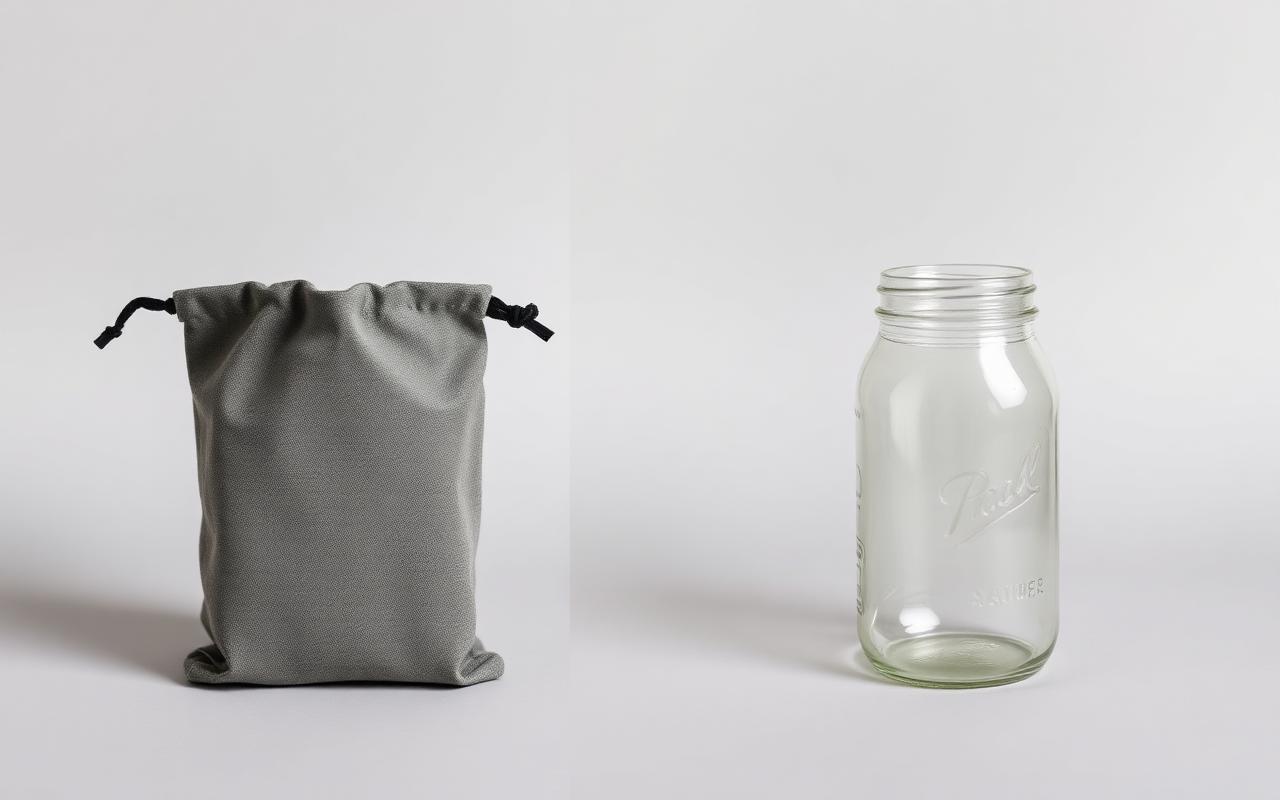
Why storage type matters
Most beginners pick storage based on what looks cool. Experienced consumers pick based on three jobs: keeping flower fresh, keeping odor in, and being practical to carry. No single container does all three perfectly, which is why most people end up with a small combination instead of a single bag or jar.
This guide breaks down how the four main storage formats actually perform so you can decide what to buy first — and what to skip.
What to look for in each format
Carbon-lined bags
Active odor adsorption + airtight zipper. Best for daily carry, travel and shared living. Wears out over 1–2 years.
Mylar pouches
Block light and oxygen, preserve freshness very well. Smell control is only as good as the heat seal. Disposable.
Glass jars
Inert, airtight, last forever. Gold standard for long-term freshness at home. Heavy, fragile, not pocketable.
Plastic stash boxes
Cheap and organized. Mediocre for both smell and freshness. Fine as a tray, weak as a primary container.
Budget, mid range or premium?
Three real-world setups across price points, each combining storage formats instead of relying on one.
Budget combo
$15 – $30
Small mason jar + 62% humidity pack + basic carbon pouch. Solves all three jobs at the lowest entry cost.
Best for
Home use, one or two strains, weekend trips.
Watch out for
Pouch carbon saturates within a year — plan to replace.
Mid-range system
$40 – $90
UV-tinted glass jar + reusable humidity pack + mid-tier carbon-lined daily-carry bag with organization.
Best for
Regular consumers, multiple strains, travel within the country.
Premium setup
$120 – $300
Sealed humidor-style storage at home + premium carbon travel case with replaceable insert and lock.
Best for
Collectors, large quantities, frequent travelers, anyone protecting an investment in good flower.
Watch out for
Don't buy premium gear before getting the basics right.
Common mistakes
MistakeTreating a carbon bag as the only container for flower.
FixBags handle smell, not freshness. Use a jar inside the bag for anything you'll keep more than a few days.
MistakeUsing clear glass jars and leaving them on a windowsill.
FixUV light degrades cannabinoids. Use UV-tinted glass or store jars in a dark drawer or cabinet.
MistakeBuying a giant jar when you only have an eighth.
FixEmpty headspace exposes flower to oxygen. Size the jar so it's mostly full.
MistakeStoring mylar pouches without resealing properly.
FixMylar loses its freshness benefit once opened. Use a heat sealer or move contents to a jar after opening.
MistakeMixing strains in one container.
FixTerpene profiles bleed together. Keep strains separated in small jars even if they all live in one bag.
The full comparison
Carbon-lined bags shine at one specific job: keeping odor inside while the bag moves around. The activated carbon layer physically adsorbs terpene molecules before they escape, and a quality weather-seal zipper closes off the only path out. The trade-off is that they're not a freshness container — flower stored loose in a bag dries out and loses terpenes within days.
Mylar pouches are the opposite. They preserve freshness exceptionally well by blocking light and oxygen, which is why dispensaries package flower in them. But they have no active odor control — once you smell mylar from a fresh dispensary purchase, you're already past the seal. Reusing them long-term also requires a heat sealer, which most home consumers don't have.
Glass jars remain the gold standard for at-home storage. Glass is chemically inert, won't off-gas plastics into the flower, and creates a perfect airtight seal with a screw lid. A UV-tinted jar adds light protection. Pair with a humidity pack and you have the best possible long-term storage environment. The downside is obvious: glass breaks, and a jar doesn't fit a pocket.
Plastic stash boxes are the most overrated category. They look organized, but most have non-airtight lids and the plastic slowly absorbs terpenes (then re-releases them). Use them as a tray for rolling or to organize jars inside, not as a primary container.
The real answer for most people: glass jars at home plus a carbon-lined bag for transport. Read our freshness storage guide for the at-home side and our smell-proof bag buyer guide for the carry side.
Common Questions
Are carbon-lined bags better than glass jars?
They solve different problems. Glass jars are the best long-term freshness container — perfectly airtight and inert. Carbon bags are the best smell-control carry option. Most regular consumers use both: jar at home, bag for transport.
Is a mylar bag the same as a smell-proof bag?
No. Mylar is a metalized film that blocks light and oxygen well, so it preserves freshness, but it has no active odor adsorption. Smell will escape around the seal unless paired with carbon.
Do plain plastic stash boxes contain odor?
Barely. Standard polypropylene and acrylic boxes contain some smell short-term but leak quickly because the lids aren't fully airtight and the plastic itself is slightly porous to terpenes.
What's the cheapest setup that actually works?
A small mason jar with a Boveda pack inside a $20 carbon pouch. The jar locks in freshness, the pack stabilizes humidity, the bag handles smell. Total cost is under $35 and lasts years.
How do I keep multiple strains separate without smell mixing?
Use individual airtight containers per strain (small jars or screw-top tins), then store them all together in a single carbon-lined bag or box. The inner containers stop strain cross-contamination; the outer bag stops odor escape.
Frequently asked
Are carbon-lined bags better than glass jars?
They solve different problems. Glass jars are the best long-term freshness container — perfectly airtight and inert. Carbon bags are the best smell-control carry option. Most regular consumers use both: jar at home, bag for transport.
Is a mylar bag the same as a smell-proof bag?
No. Mylar is a metalized film that blocks light and oxygen well, so it preserves freshness, but it has no active odor adsorption. Smell will escape around the seal unless paired with carbon.
Do plain plastic stash boxes contain odor?
Barely. Standard polypropylene and acrylic boxes contain some smell short-term but leak quickly because the lids aren't fully airtight and the plastic itself is slightly porous to terpenes.
What's the cheapest setup that actually works?
A small mason jar with a Boveda pack inside a $20 carbon pouch. The jar locks in freshness, the pack stabilizes humidity, the bag handles smell. Total cost is under $35 and lasts years.
How do I keep multiple strains separate without smell mixing?
Use individual airtight containers per strain (small jars or screw-top tins), then store them all together in a single carbon-lined bag or box. The inner containers stop strain cross-contamination; the outer bag stops odor escape.
Newsletter
Get the weekly Chill drop
Travel guides, dispensary picks, deals, and the funniest weed memes on the internet — straight to your inbox.
Subscribe free