Overview
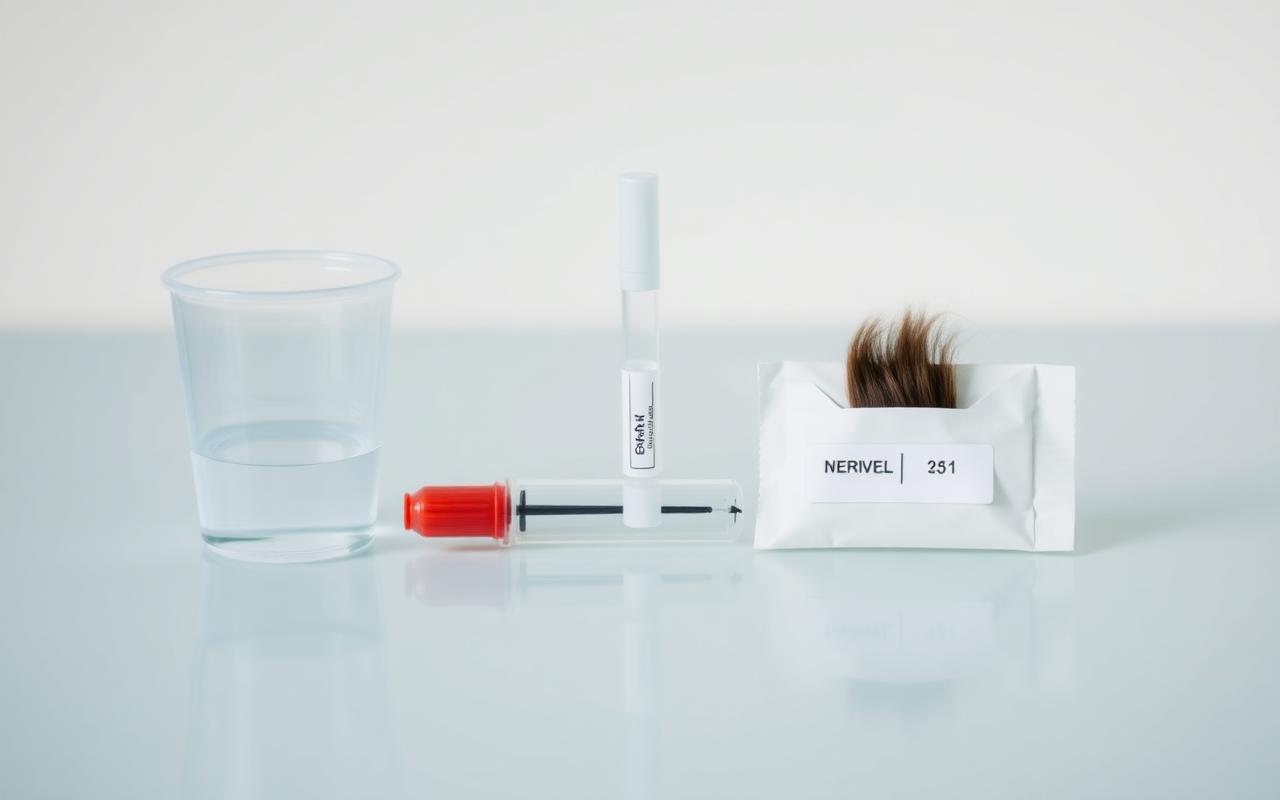
Not all cannabis drug tests are looking for the same thing. Urine, saliva and hair all reveal different parts of your consumption history — and the right one for an employer or court isn't necessarily the right one for personal screening.
Here's how the three most common methods stack up across detection window, accuracy, cost and what they actually catch.
Key takeaways
The fast-read version before you dive into the full guide.
Urine — broadest workplace standard
Detection window of 3–30+ days depending on frequency.
Saliva — recency, not history
Catches use from the last 24–72 hours, sometimes a week for heavy users.
Hair — long lookback only
Covers about 90 days but misses the last week of use.
Different chemistry
Urine and hair look for metabolites; saliva looks for parent THC.
Different cost
Urine $20–$50, saliva $25–$60, hair $100–$200 lab cost.
Different defeatability
Hair is the hardest to manipulate; saliva is the easiest to time around.
What to look for
Use the criteria above as your evaluation checklist. The categories below translate them into concrete tiers you can shop against.
Tiered comparison
How the options stack up at each level.
Saliva swab
$25 – $60
Best for proving very recent use or impairment.
Best for
Roadside, post-incident workplace policies.
Urine immunoassay + GC/MS confirm
$30 – $75
Industry workhorse balancing window, cost and accuracy.
Best for
Pre-employment, random testing programs.
Hair follicle test
$100 – $200
Long-window lookback for patterns of use.
Best for
Custody, security clearance, executive screening.
Watch out for
Costly and slow to update — not for recent use.
Common mistakes to avoid
MistakePreparing for a saliva test like it's a urine test.
FixSaliva is about recency. Stop 72+ hours before to be safe.
MistakeBelieving hair tests can be 'washed out'.
FixDetox shampoos rarely affect lab-grade hair tests. Time is the only fix.
MistakeTreating one negative as proof of overall cleanliness.
FixDifferent methods test different windows — passing one doesn't mean passing another.
MistakeAssuming all employers use the same cutoff.
FixAsk your HR or testing partner; cutoffs differ by industry.
MistakeTrying to substitute samples.
FixModern collection includes temperature, witnessed collection and other safeguards.
The full educational guide
Urine remains the most common test in the U.S. because it offers the best balance of detection window, cost and operational simplicity. Most pre-employment programs use a 50 ng/mL screen with GC/MS confirmation if the screen is positive.
Saliva testing has gained ground in fleet management, post-accident testing and roadside enforcement because it correlates more closely with recent use. A positive saliva test typically means someone consumed within the past 24–72 hours.
Hair testing is the long lens. It's overwhelmingly used in high-trust contexts: custody disputes, security clearances, executive hires. A standard 1.5-inch sample from the scalp reflects roughly the last 90 days of use, but won't catch use from the very recent past because hair has to grow above the scalp first.
Blood testing exists too but is rarely used outside DUI and medical settings. THC blood levels fall quickly, so blood is mostly useful for proving impairment in the last few hours.
When you're choosing how to test yourself before a real test, pick the same sample type the testing entity will use. A clean urine kit doesn't predict a clean hair test, and vice versa.
Common Questions
Which test is hardest to pass after recent use?
Hair — it can detect use up to 90 days back. Urine is next for heavy users.
Which test is the easiest to time around?
Saliva. Detection windows are short, usually 24–72 hours.
Do saliva tests catch edibles?
Yes if eaten within the detection window, though the THC levels in saliva from edibles are often lower than from smoking.
Are hair tests biased by hair color or ethnicity?
Research is mixed, but darker hair binds metabolites slightly more — labs typically don't adjust for this.
Which test do most U.S. employers use?
Urine immunoassay with GC/MS confirmation remains the most common pre-employment screen.
Conclusion
Match your prep to the method. Urine for breadth, saliva for recency, hair for the long lookback — and lab confirmation when accuracy matters.
Frequently asked
Which test is hardest to pass after recent use?
Hair — it can detect use up to 90 days back. Urine is next for heavy users.
Which test is the easiest to time around?
Saliva. Detection windows are short, usually 24–72 hours.
Do saliva tests catch edibles?
Yes if eaten within the detection window, though the THC levels in saliva from edibles are often lower than from smoking.
Are hair tests biased by hair color or ethnicity?
Research is mixed, but darker hair binds metabolites slightly more — labs typically don't adjust for this.
Which test do most U.S. employers use?
Urine immunoassay with GC/MS confirmation remains the most common pre-employment screen.
Newsletter
Get the weekly Chill drop
Travel guides, dispensary picks, deals, and the funniest weed memes on the internet — straight to your inbox.
Subscribe free