What are terpenes?
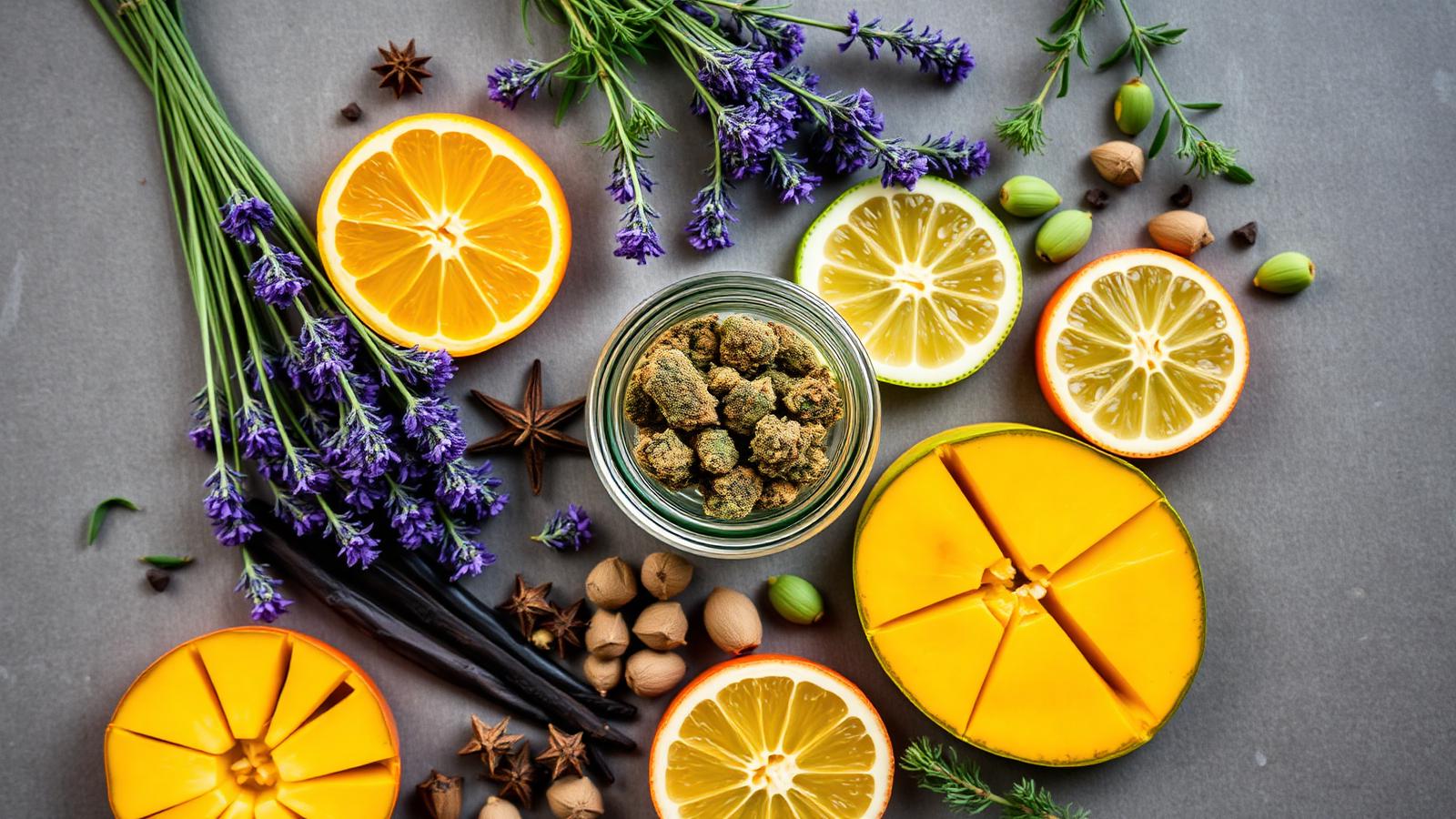
Terpenes are natural aromatic compounds produced by plants. They're responsible for the smell of lavender, the sharpness of pine, the brightness of citrus peel — and the distinctive aroma of every cannabis strain. Hundreds of terpenes exist across the plant world; cannabis alone expresses dozens at meaningful levels.
Beyond smell, terpenes shape flavor and influence how cannabis actually feels. Two strains with identical THC percentages can deliver completely different experiences because their terpene profiles differ.
Common cannabis terpenes
Myrcene
Aroma: mango, herbal, ripe fruit. Often dominant in relaxing, body-heavy strains. Also found in mangoes, hops, and lemongrass.
Limonene
Aroma: lemon, orange peel. Frequently linked to uplifting and mood-lifting strains. Also found in citrus rinds, juniper, and rosemary.
Pinene
Aroma: pine forest, rosemary, fresh herbs. Often associated with alertness and clarity. Also found in pine needles, basil, and parsley.
Linalool
Aroma: lavender, soft floral. Common in relaxing, evening-leaning strains. Also found in lavender, mint, and cinnamon.
Caryophyllene
Aroma: black pepper, clove, woody warmth. Uniquely interacts with cannabinoid receptors. Also found in black pepper, cloves, and hops.
Why terpenes matter
The "entourage effect" describes how cannabinoids and terpenes work together to shape the cannabis experience. THC alone is a single dimension; combine it with myrcene and you tend toward sedation, combine it with limonene and pinene and the same THC can feel bright and clear.
This is why looking only at THC percentage on a label is a beginner mistake. A 20% THC flower with a rich, intentional terpene profile often delivers a better experience than a 30% flower with degraded terps.
Profiles & experiences
Limonene + Pinene
Bright, focused, social. Great for creative work and outdoor activity.
Myrcene + Linalool
Calming, body-relaxing, sleep-leaning.
Caryophyllene-forward
Grounding and warm. Works across the day for many people.
Limonene + Caryophyllene
Mood-lifting with a steady, confident body presence.
Choosing products by terpenes
Most modern dispensaries publish terpene tests alongside cannabinoid content. Ask for them. Once you find a profile you love — say, limonene-dominant with caryophyllene secondary — you have a far more reliable shortcut than chasing strain names that change brand to brand.
Smell before you buy where allowed. Loud, complex aroma usually signals a good cure and well-preserved terpenes. Faint, hay-like smell often means the terps have degraded — and the experience will be flatter than the THC suggests.
Beginner tips
Build your own terpene memory
Frequently asked
Are terpenes psychoactive?
Not on their own at typical doses, but they meaningfully shape how cannabinoids feel — which makes them part of the overall experience.
Do edibles preserve terpenes?
Most cooking destroys delicate terpenes. Rosin-infused edibles tend to preserve more terps than distillate-based products.
Can I buy terpenes separately?
Yes — botanical terpene blends are sold as additives, often added to vape carts, topicals, and concentrates to enhance flavor and effect.
Newsletter
Get the weekly Chill drop
Travel guides, dispensary picks, deals, and the funniest weed memes on the internet — straight to your inbox.
Subscribe free